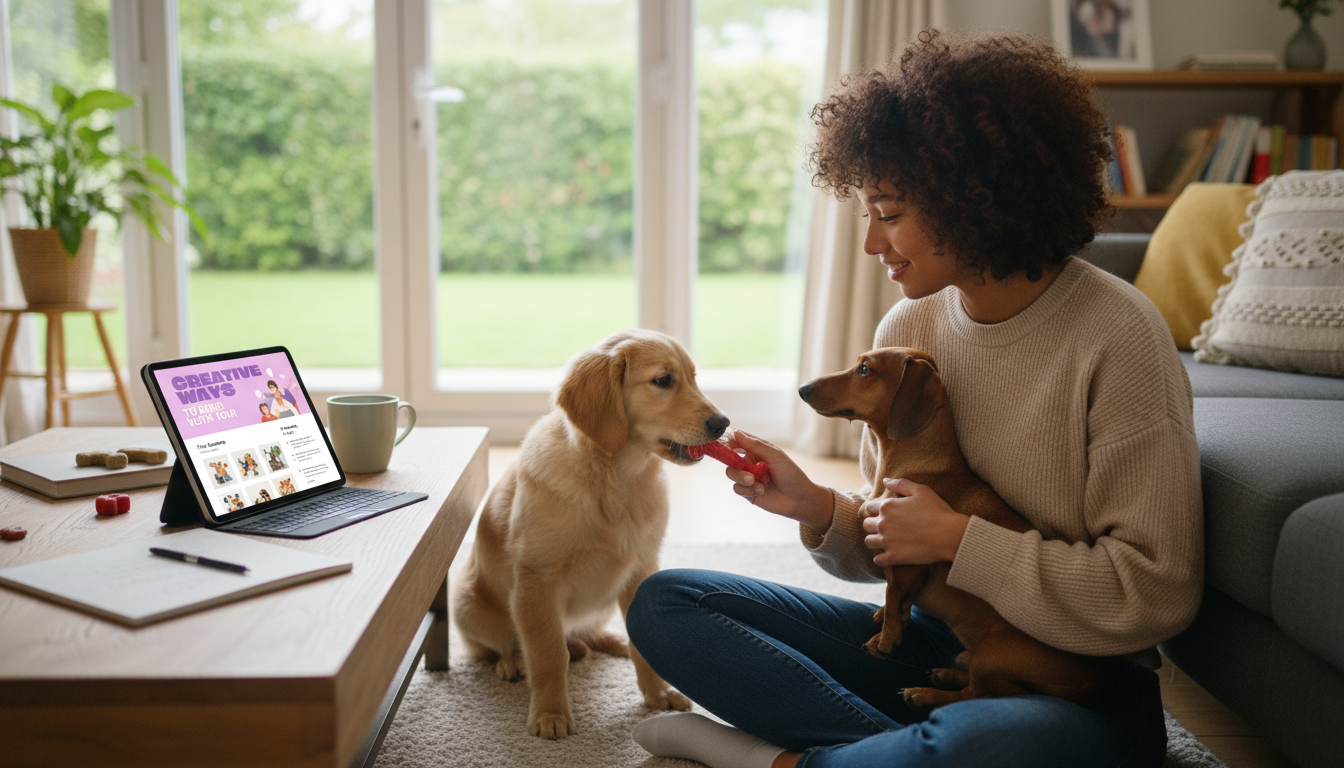
A strong bond with a pet is built in small, repeatable moments: shared play, predictable routines, and clear communication. The most effective bonding activities match a pet’s species, age, health, and personality—then get repeated often enough to feel safe and rewarding. Below are practical play ideas and connection-building habits you can use right away, plus a simple baseline for how much play is “enough” for common pet types. For more guidance, see Easy Ways to Strengthen the Bond With Your Pet – Houston SPCA.
Bonding isn’t a single grand gesture—it’s the steady pattern of experiences that teaches your pet you’re safe, predictable, and fun to be around. For further reading, see 7 tips to build a strong bond with your dog | Animal Humane Society.
Great play feels cooperative. The goal is a back-and-forth rhythm where your pet can opt in and opt out without pressure.
For species-specific care basics that support healthy play, the AVMA’s guides are a helpful reference for dogs and cats.
Start with typical species norms, then adjust for age, breed/drive, health, your environment, and whether your pet has enrichment between sessions. Focus on “good endings”: play should wrap up with calmer breathing and easier settling—not frantic grabbing or irritability.
| Pet type | Typical daily interactive play | Best session length | Notes to adjust |
|---|---|---|---|
| Adult dogs | 30–90 minutes total (split across day) | 5–20 minutes | Higher-drive dogs may need more training + sniffing time; seniors often prefer shorter, gentler games. |
| Puppies | Several short sessions plus training | 2–10 minutes | Avoid exhausting impact; prioritize gentle tug, scent games, and settling practice. |
| Adult cats | 15–45 minutes total (2–4 sessions) | 5–10 minutes | End with a “catch” and a small meal/treat to complete the hunt cycle. |
| Kittens | Multiple short sessions | 2–5 minutes | Rotate toys to prevent boredom; prioritize safe wand play over hands. |
| Small mammals (rabbits/guinea pigs) | 20–60 minutes supervised activity + enrichment | 10–20 minutes | Favor exploration, foraging, and gentle interaction; ensure safe, enclosed space. |
| Birds (parrots) | 1–4+ hours out-of-cage interaction/enrichment (varies widely) | 10–30 minutes per activity | Mix training, shredding/foraging, and calm social time; watch for overstimulation. |
If playtime is too low, you may see more attention-seeking, restlessness, vocalizing, destructive behavior, or pestering other pets. If playtime is too intense, look for zoomies that don’t resolve, nipping, frantic grabbing, and trouble settling afterward.
These ideas are designed to work in short bursts, with clear beginnings and endings—helpful for busy days and easily overstimulated pets.
Use a species baseline, then adjust for age, energy level/drive, health, and behavior signs. Most pets do best with multiple short sessions spread across the day, mixing interactive play with enrichment and calm time.
Try scent and foraging games, short treat-based training, touch/target practice, gentle exploration walks, and calm rituals like cooperative brushing. Start with very short sessions and let your pet choose whether to engage.
Yes—fast, intense play can push arousal and adrenaline up, making some pets edgier instead of satisfied. Add pause cues, end on a calmer note, and switch to sniffing/licking/chewing-style enrichment to help your pet settle.







Leave a comment